The Grail Code: 1437
Follow seven clues through Valencia in a detective adventure inspired by the Holy Grail.
Free · In English · Starts at Jardines del Real
Play the Grail CodeTravel to Valencia
A ready-made route with audio stories, maps and answers to your questions, all on your phone.
31 main places · €12.90 · 72 hours access
Explore through a game
Choose your experience
One payment. No subscription. Choose how much of Valencia you want to explore and start when it suits you.
Every plan includes mapped stops, prepared audio, photo questions and the family discovery game.
SHORT
€6.90
one-time
✓ 11 essential stops
✓ 24 hours access
✓ 15 AI questions
✓ AI answers in text
STANDARD
€12.90
one-time
✓ 31 main places
✓ 72 hours access
✓ 40 AI questions
✓ AI answers in text
VIP
€25.90
one-time
✓ 31 main places
✓ 72 hours access
✓ Unlimited AI questions
✓ AI voice answers included
One access code for you and your partner — explore together on your own phones.
Buying ahead? Your access starts when you activate your guide, not when you pay.
Choose your tour language using the language selector.
Try your guide free
Listen to the Torres de Serranos story, then discover how a photo question works. No payment or access code needed.
Listen. Explore. Ask.
Imagine approaching Valencia six hundred years ago. There is no open boulevard ahead, no easy way to wander into town. Instead, a wall separates the city from the countryside, and the road leads towards two enormous stone towers. This is the entrance you have to pass through.
Tap or drag the bar to choose where to listen.
AI-generated narration
The Serranos Towers were built between 1392 and 1398, under the direction of the master builder Pere Balaguer. They belonged to Valencia’s medieval defences, but defence was only part of their purpose. This was also a ceremonial entrance, designed to make an impression. A visitor arriving here was meant to understand that Valencia was a prosperous city with the resources to build on a grand scale.
Look at the relationship between the narrow gateway and the great mass of stone around it. It makes the human figure seem small. Then look upwards, where the battlements give the towers their unmistakable silhouette. Their power comes partly from this contrast: a practical opening at ground level beneath an architecture of authority.
If you can walk around to the city side, compare the two faces. The side looking into Valencia is much more open, revealing a different structure from the imposing outer front. A single photograph rarely captures that contrast. Take a moment to see both sides and the building becomes much easier to understand.
The towers also had a second life that few arriving travellers would have wanted to experience. From 1586 to 1887, they served as a prison for members of the nobility. They survived the demolition of much of the city wall in the nineteenth century. Today they stand almost like the surviving punctuation mark of a much longer sentence: the wall has gone, but its great entrance remains.
Here is the most unexpected chapter. During the Spanish Civil War, artworks evacuated from Madrid’s Prado Museum were sheltered in the Serranos Towers. A structure built to help defend a medieval city became a refuge for works of art centuries later. The paintings were here for protection, rather than as a public exhibition.
That is what makes this such a revealing stop in the city. These stones carry several different histories: the city that welcomed visitors, the prison that confined people, and the shelter that protected art. Before leaving, frame the gateway between the towers and imagine the vanished walls continuing on either side. The streets towards Plaza de la Virgen and the gardens beyond the old city boundary now offer two very different continuations from this historic threshold.
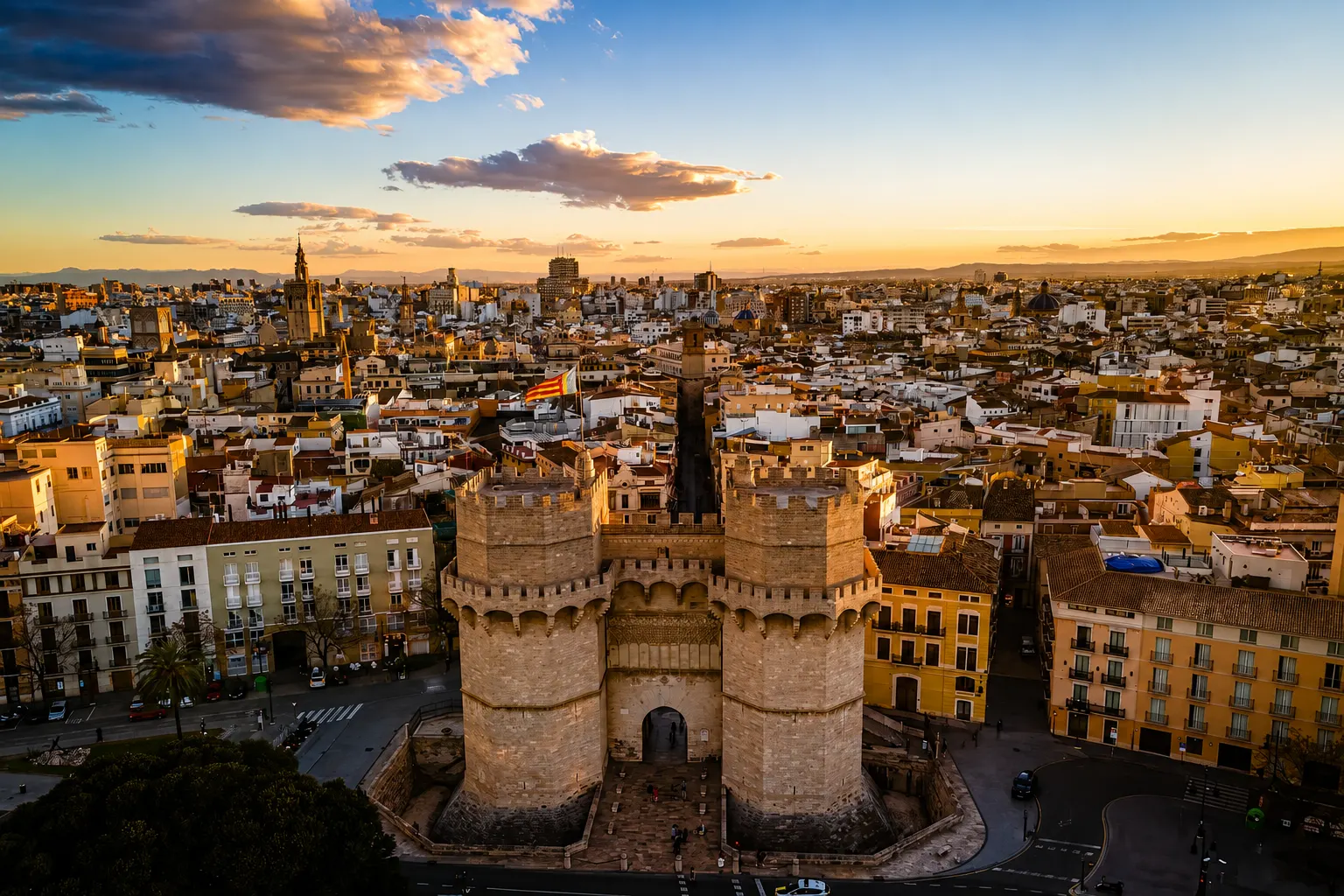
Photo question example
What were these towers used for?
Two massive stone towers flank an arched gateway in this photo. These are the Torres de Serranos, built between 1392 and 1398 as part of Valencia’s medieval defences and as a ceremonial entrance to the city. Their story did not end with the city walls: from 1586 to 1887 they served as a prison for members of the nobility. During the Spanish Civil War, they also sheltered artworks evacuated from the Prado Museum. Look again at the small gateway beneath the towers: the contrast makes the entrance feel especially imposing.
Prepared example — your own photo questions are available after purchase.
Choose a plan and receive your access code by email.
Open the guide on your phone and enter your code when you are ready to start.
Choose a stop, open its map, listen to the story and ask a question. Take breaks whenever you like.
Follow seven clues through Valencia in a detective adventure inspired by the Holy Grail.
Free · In English · Starts at Jardines del Real
Play the Grail CodeFind a tiny cat house. Spot a parrot above the market. Count the fountain figures. Give curious children seven discoveries to look for while you explore Valencia together.
7-discovery family game included
Choose your guide + included gameYour next adventure: Peñíscola
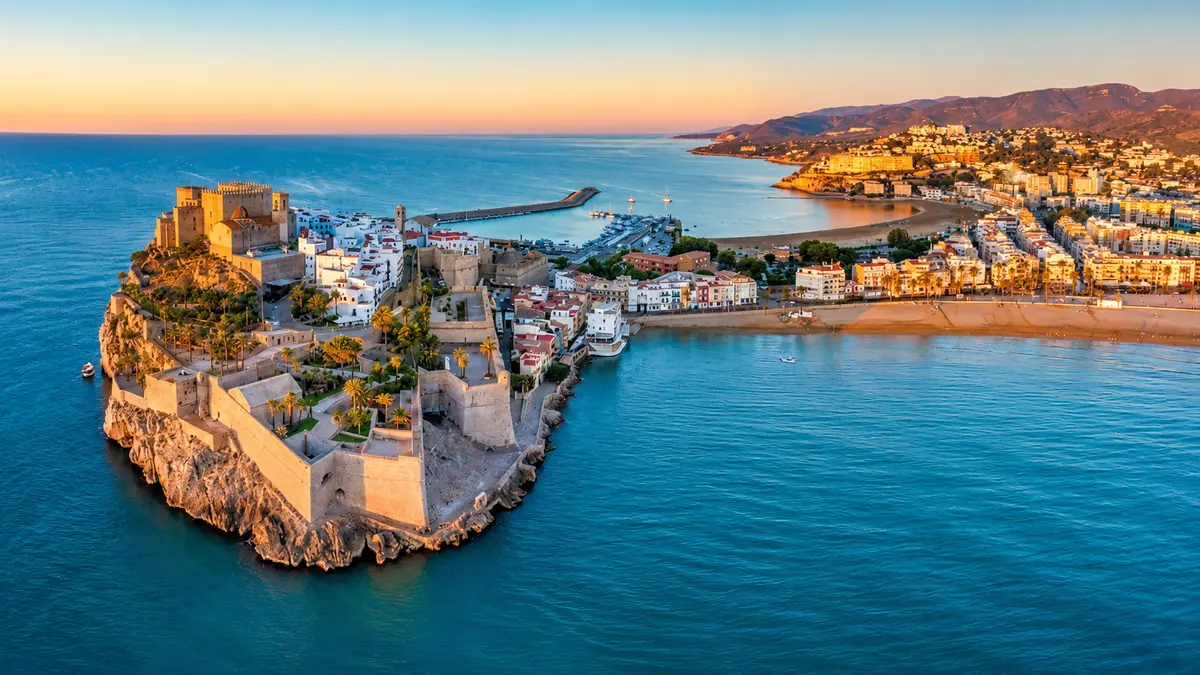
A seaside fortress, ten historic stops and the story of Papa Luna.
€20 · English stories and audio
Explore PeñíscolaEach destination has its own purchase and access code.